On this page
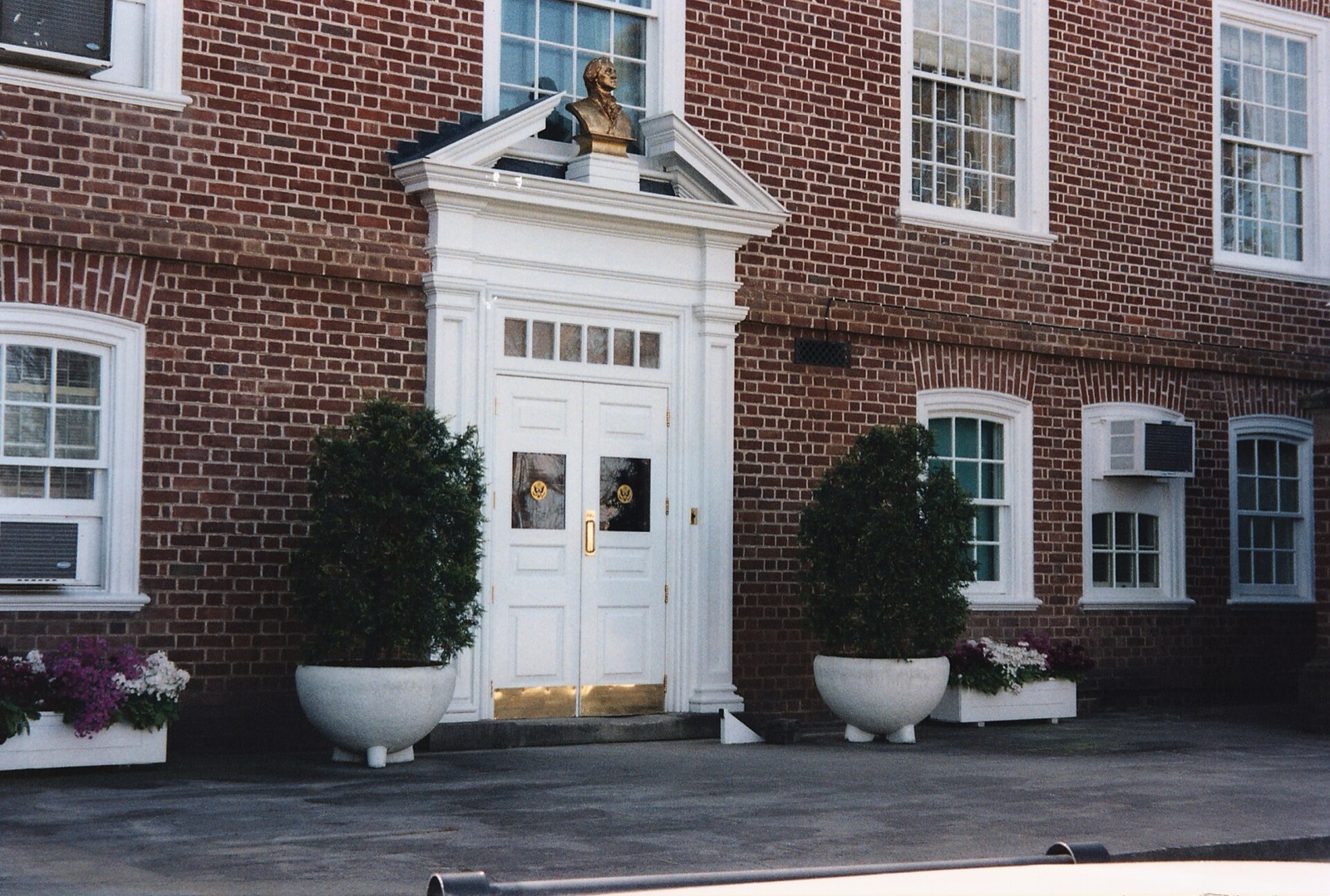
Every visa decision is treated as a national security decision. The visa interview is the last gate between your sponsor’s form and a J-1 visa. It is short, but the officer’s decision is final for that application. This page follows the State Department’s visa denials page and interviews and documents page. It covers what to bring, which topics the officer must settle, and what to do if the answer is no. The apply hub lists the other steps, and the State Department’s exchange visitor visa page is the source for the process.
The short version
- Pay the SEVIS fee before you go to the embassy for your interview.
- Complete the online DS-160 and print the confirmation page.
- Book your own appointment, because the embassy does not schedule it for you.
- Bring your passport, the DS-160 page and your DS-2019 to the interview.
- Do not buy tickets until you have the visa.
What to expect at your interview
A consular officer will interview you to determine whether you qualify for an exchange visitor visa. You must establish that you meet the requirements under US law. US law generally requires visa applicants to be interviewed by a consular officer at a US embassy or consulate. Consular officers have the sole authority to approve or deny visa applications.
An interview is required for applicants from age 14 through 79, with few exceptions. Persons aged 13 and younger, and aged 80 and older, generally do not need one unless the embassy asks. Consular officers may require an interview of any applicant.
There are only two possible outcomes: the officer issues the visa or refuses it. If you have not established that you are eligible, the officer must refuse. Most applications are approved, but US law sets out many grounds for denial. Ink-free digital fingerprint scans are taken as part of the application, usually at the interview.
Interview waiver
The State Department’s waiver notice lists applicants who previously held a visa in the same category that expired less than 12 months before the new application. A first-time Summer Work and Travel applicant has no earlier J-1 visa in that category. Even when a person qualifies, officers may still require an in-person interview.
Before the interview: the steps in order
Your path to the interview has fixed steps, though the order may vary by embassy or consulate. Review the instructions on the website of the embassy where you will apply. Here is the usual order:
- Be accepted by a sponsor, which registers you in SEVIS.
- Pay the SEVIS I-901 fee once your registration is active. The SEVIS fee page has the details.
- Complete the online DS-160 and print the confirmation page.
- Schedule your own appointment: the embassy does not schedule it for you.
- Pay the visa application processing fee.
A SEVIS fee receipt matters because you must pay the fee before going to the embassy for your interview. For Summer Work and Travel the SEVIS fee is $35. Allow at least three business days for the payment to be received and verified.
The DS-160 is submitted electronically to the State Department. Consular officers use it, combined with a personal interview, to decide your eligibility. Print and keep the DS-160 barcode page.
Where and when to book
Schedule your interview at the embassy or consulate in your country of nationality or residence. You must be able to show residence in the country where you apply if your place of application is based on residency. Applicants who apply outside their country of nationality or residence should expect to wait significantly longer. Fees paid for such applications are not refunded and cannot be transferred.
Wait times for interview appointments vary by location, season and visa category, so apply early. The wait-time figure is an estimate that does not guarantee an appointment. It is based on workload and staffing and can change from week to week.
Do not buy tickets yet. There is no guarantee that you will be issued a visa, so do not make final travel plans or buy tickets until you have it. You may enter the US no earlier than 30 days before your program start date.
An expedited interview is possible only for an urgent, unforeseen situation such as a funeral, medical emergency or school start date. You must first submit the DS-160, pay the fee and book the first available appointment. Last-minute tourism does not qualify.
Documents to bring
| Document | What to know | Source |
|---|---|---|
| Passport | Valid at least six months after your period of stay | State Department |
| DS-160 confirmation page | Print it after completing the online form | State Department |
| Form DS-2019 | Sent by your sponsor after it enters you in SEVIS | State Department |
| Visa fee receipt | If you must pay before the interview | State Department |
| SEVIS fee receipt | Recommended; embassies can usually check payment electronically | ICE |
| Photo | One 2x2 photograph is listed; some embassies ask for one printed photo | State Department |
Each person who needs a visa submits a separate application. Your photo must meet the State Department’s requirements, and the embassy decides whether to accept it. Eyeglasses are no longer allowed in new visa photos except in rare medical cases. The DS-160 asks you to upload your digital image.
You must read the Legal Rights and Protections pamphlet before applying. The embassy website may require more documents about your intent to leave the US after travel. The DS-2019 page explains the form you carry.
The visa fee on the State Department table, captured in 2025, was $185 for a non-petition-based visa, a group that includes J exchange visitors. The fee is non-refundable. Applicants for J visas in US Government-sponsored educational and cultural exchanges pay no fee. After approval you may owe a visa issuance fee, if one applies to your nationality.
Common J-1 visa interview questions and answers during the interview
The State Department does not publish a list of interview questions. It does publish what the officer must decide, so prepare answers on those topics. Here is how each topic ties to a rule.
Questions about your program
Be ready to explain what Summer Work and Travel is and why you qualify. Participants must be post-secondary students enrolled in a degree or other full-time course at an accredited institution outside the US. They must have completed at least one semester of study. They also need enough English to work in an English-speaking setting.
The program lasts at most four months. Students must return home before the start date of their university or college. Participants can join the program more than once. If you are not from a visa waiver country, you must be pre-placed in a job before entry. The sponsor must provide pre-arranged and fully vetted employment to participants who are not from a visa waiver country.
Visa waiver participants may arrive without a job. Sponsors must make sure they have enough money to live on during their search.
Financial questions
The officer looks at your financial resources. If you cannot cover all the costs of your travel, you may show evidence that another person will cover some or all of them. Sponsors must verify that you have adequate financial resources to take part in the program before issuing the DS-2019. A participant should know the program fees, the SEVIS fee and the visa fee, and who pays each.
Family and home ties
Ties are the parts of your life that bind you to your home country. Examples are your job, your home and your relationships with family and friends. Evidence of your employment or family ties may be enough to show your reason for travel and your intent to return home. Applicants must demonstrate binding ties to a residence in a foreign country that they have no intention of abandoning, and that they are coming to the US for a temporary period.
No exact form of evidence is required, because applicants’ circumstances vary greatly. Officers look at each application individually, weighing your circumstances, travel plans, financial resources and ties outside the US.
Your online presence
F, M and J student and exchange visitor applicants are subject to online presence review. The State Department instructs these applicants to set the privacy settings on all their social media profiles to public or open. The Department uses all available information in visa screening to identify applicants who are inadmissible. Applicants must credibly show they intend to engage in activities consistent with the terms of their admission.
After the interview: approval, processing or refusal
After the interview, the officer may decide your application needs further administrative processing, and will tell you if so. Processing takes additional time after the interview, and the time varies. For the status of your case, contact the embassy or consulate that handles it. Do not ask about status for at least 180 days after the interview or after you send added documents, unless you have an emergency.
A refusal under section 221(g) means your application was incomplete or needs more documents. You have one year from the refusal date to submit what the officer asked for. After that you must reapply and pay another fee.
If the officer refuses the visa, you are in most cases told which section of law applies. The officer also advises you whether you may apply for a waiver of the ineligibility. Some ineligibilities can be overcome, while others are permanent.
If you are refused under 214(b)
A 214(b) refusal means you did not sufficiently show that you qualify for the visa category, or did not overcome the presumption of immigrant intent. There is no appeal. If you feel there is more information to consider, or your circumstances changed significantly, you may reapply. To reapply you complete a new form, pay the fee again and schedule a new interview. The fee you paid is not refunded.
Never misstate facts. Attempting to get a visa by willful misrepresentation of a material fact or fraud may result in permanent refusal or denial of entry. Staying past an authorized period in the US is another ground of ineligibility.
Day-of checklist
- Carry your passport, valid at least six months after your stay.
- Carry the DS-160 confirmation page.
- Carry your DS-2019 from your sponsor.
- Carry the visa fee receipt if you were required to pay first.
- Carry the SEVIS fee receipt for the $35 Summer Work and Travel fee.
- Bring one photo if your embassy asks for one.
- Do not wear a hat or head covering that hides your hair or hairline in a photo unless it is worn daily for religious purposes.
- Show documents of your ties: job, home, family.
- Be ready to show that your sponsor placed you in a job, unless you are from a visa waiver country.
- Answer only with facts you can prove, because fraud can lead to permanent refusal.
- Remember that only the applicant or authorized people can ask about a denied case, because visa case records are confidential.
- A U.S. visa is a privilege, not a right.
After you have the visa
A visa does not guarantee entry. It lets you travel to a US port of entry and ask permission to enter. A CBP officer at the port of entry decides whether to admit you. If you are admitted, the officer gives you an admission stamp or a paper Form I-94. Your passport and visa are returned to you after approval, so arrange that return. See entering the US for the border steps.
Questions applicants ask
What documents do I bring to a J-1 visa interview?
Bring your passport, the DS-160 confirmation page, your DS-2019 and any application fee receipt. Add the SEVIS fee receipt if you paid it. Check the embassy website for extra items.
Do I need an interview for a J-1 visa?
Usually yes. An interview is required for applicants from age 14 through 79, with few exceptions. The interview-waiver categories include people who held the same visa category that expired less than 12 months before. Officers may still require one.
What happens if my J-1 visa is refused under 214(b)?
You did not show that you qualify or that you have strong ties to your home country. There is no appeal. You can reapply with a new form, a new fee and a new interview, and you should show significant changes in your circumstances.
How long does a J-1 visa interview appointment take to get?
Wait times vary by location, season and visa category, so apply early. The State Department wait-time figure is an estimate and does not guarantee an appointment.
Can I interview in another country?
You should schedule at the embassy or consulate in your country of nationality or residence. Applying elsewhere can make it harder to qualify, fees are not refunded, and waits are longer.
Do I have to make my social media public?
F, M and J applicants are subject to online presence review, and the State Department instructs them to set their social media profiles to public or open.
Read next
Apply
DS-2019 for J-1 Summer Work and Travel: What It Is, Where to Get It, How to Use It
What the DS-2019 form is, who issues it, what it lists, why you need the printed copy for the visa interview and the US border, and what to do if it is lost.
Apply
I-901 SEVIS Fee for J-1 Summer Work and Travel: Amount, How to Pay, Receipt
Summer Work and Travel participants pay a reduced I-901 SEVIS fee of $35, before the visa interview. How to pay, what the receipt is, and what else costs money.
Apply
How to Apply for J-1 Summer Work and Travel: Steps from Sponsor to Visa
Apply for J-1 Summer Work and Travel step by step: choose a sponsor, interview, get a job, receive the DS-2019, pay the SEVIS fee and attend the visa interview.
Sources
- Exchange Visitor Visa (U.S. Department of State, travel.state.gov; via Wayback capture 2025, seen 2026-10-20) · U.S. Department of State, Bureau of Consular Affairs · travel.state.gov · checked October 20, 2026
- Interviews and Documents (BridgeUSA, U.S. Department of State) · U.S. Department of State, Bureau of Educational and Cultural Affairs · j1visa.state.gov · checked October 20, 2026
- Adjudicating Nonimmigrant Visa (NIV) Applicants in Their Country of Residence (U.S. Department of State, travel.state.gov; via Wayback capture 2025, seen 2026-10-20) · U.S. Department of State, Bureau of Consular Affairs · travel.state.gov · checked October 20, 2026
- Fees for Visa Services (U.S. Department of State, travel.state.gov; via Wayback capture 2025, seen 2026-10-20) · U.S. Department of State, Bureau of Consular Affairs · travel.state.gov · checked October 20, 2026
- I-901 SEVIS Fee Frequently Asked Questions (ICE, Student and Exchange Visitor Program), fetched 2026-10-20 · U.S. Immigration and Customs Enforcement (DHS), SEVP · ice.gov · checked October 20, 2026
- Interview Waiver Update (February 2025 notice) (U.S. Department of State, travel.state.gov; via Wayback capture 2025, seen 2026-10-20) · U.S. Department of State, Bureau of Consular Affairs · travel.state.gov · checked October 20, 2026
- Visa Denials (U.S. Department of State, travel.state.gov; via Wayback capture 2025, seen 2026-10-20) · U.S. Department of State, Bureau of Consular Affairs · travel.state.gov · checked October 20, 2026
- Visa Appointment Wait Times (U.S. Department of State, travel.state.gov; via Wayback capture 2025, seen 2026-10-20) · U.S. Department of State, Bureau of Consular Affairs · travel.state.gov · checked October 20, 2026
- Announcement of Expanded Screening and Vetting for Visa Applicants (U.S. Department of State, travel.state.gov; via Wayback capture 2025, seen 2026-10-20) · U.S. Department of State, Bureau of Consular Affairs · travel.state.gov · checked October 20, 2026
- DS-160: Online Nonimmigrant Visa Application (U.S. Department of State, travel.state.gov; via Wayback capture 2025, seen 2026-10-20) · U.S. Department of State, Bureau of Consular Affairs · travel.state.gov · checked October 20, 2026
- Visa Photos (U.S. Department of State, travel.state.gov; via Wayback capture 2025, seen 2026-10-20) · U.S. Department of State, Bureau of Consular Affairs · travel.state.gov · checked October 20, 2026
- Summer Work Travel (J-1 BridgeUSA, U.S. Department of State) · U.S. Department of State, Bureau of Educational and Cultural Affairs · j1visa.state.gov · checked October 20, 2026
Image credits (1)
- U.S. Department of State / Wikimedia Commons · Public domain · source

Fees, forms and wage rates change: each source shows the date it was checked. How we check facts · Report an error.