On this page
- The short version
- What the DS-2019 is and what it shows
- Where you get your DS-2019
- Do you need a DS-2019 to enter the US?
- Who qualifies: Summer Work Travel students must be
- Paper copies, email and digital signatures
- Using the DS-2019 once you are in the US
- Travel signature, lost forms and corrections
- Quick reference
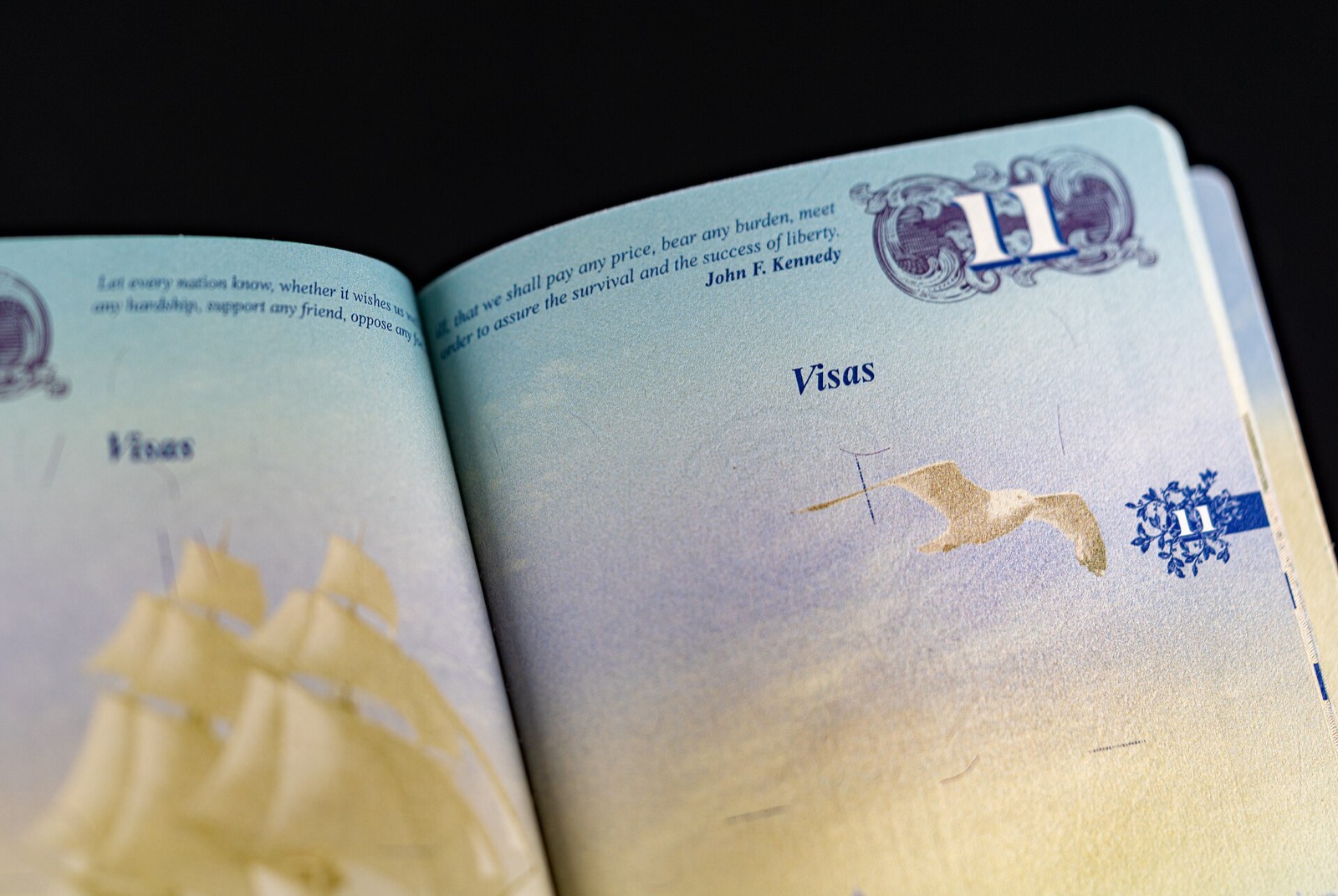
The DS-2019 sits between your sponsor and the visa. Until your sponsor issues it, you cannot seek a consular interview. Once you have it, you use it at the embassy, at the border, on your first day at work and on any trip abroad. This page follows it through those steps, using the State Department DS-2019 page and 22 CFR 62.12. The apply hub shows where it fits in the whole process.
The short version
- Wait for your sponsor to issue the DS-2019, because you cannot apply for it yourself.
- Print the form after your sponsor sends it, and keep the paper copies.
- Bring the DS-2019 to your visa interview.
- Show it with your passport and visa to officers at the US port of entry.
- Do not arrive more than 30 days before the program start date on the form.
What the DS-2019 is and what it shows
The Form DS-2019 is the basic document used in the administration of the exchange visitor program. Its full name is the Certificate of Eligibility for Exchange Visitor (J-1) Status. It permits a prospective exchange visitor to seek an interview at a U.S. embassy or consulate in order to obtain a J visa.
The form identifies you and your designated sponsor. It also gives a brief description of your program, including the start and end date, the category of exchange and an estimate of the cost. The sponsor details sit in block 2, the program dates in block 3 and the category in block 4. Block 5 shows a breakout of the total estimated financial support for your program.
No blank Forms DS-2019 exist. Each form carries a unique SEVIS ID in the top right-hand corner: the letter N followed by up to 10 numbers.
Where you get your DS-2019
You do not apply for the form yourself. Designated sponsors are authorized to issue it to prospective exchange visitors they have screened and selected. The sponsor fills in the information before giving the form to you. Only then can you apply for the J-1 visa at a U.S. embassy or consulate.
The order goes like this:
- Contact a designated sponsor and be accepted into its program.
- The sponsor enters your information into the SEVIS database.
- The sponsor sends you the DS-2019 form.
- Pay the I-901 SEVIS fee if the sponsor tells you to, or confirm the sponsor has already paid it. The SEVIS fee page covers this step.
- Complete the online DS-160 visa application and bring the DS-2019 to your visa interview.
The sponsor decides who gets a form. Before issuing one, a sponsor must verify that you are eligible for, qualified for and accepted into the program, and that you have adequate financial resources to take part. Sponsors screen and select. Consular officers still decide the visa: even with a DS-2019 in hand, the officer decides whether you receive the J-1 visa.
Fees vary from sponsor to sponsor, based on the exchange category, the sponsor’s program and program duration. Check with your sponsor for a breakdown of all costs and fees. The State Department explains fees on its fees and eligibility page. Questions about the form go to the designated sponsor, whose name and telephone number are printed on it. See how to apply for the full path from sponsor to visa.
Do you need a DS-2019 to enter the US?
Yes. Exchange visitors must carry their Forms DS-2019 to the U.S. port of entry and present their passports, visas and DS-2019 to CBP officers to seek entry. Exchange visitors must obtain J-1 visas to enter the United States.
A visitor visa does not work as a substitute. Foreign nationals may not travel to the U.S. to take part in an exchange on a B-1/B-2 visitor visa, or through the Visa Waiver Program. Hand-carry the printed form to the port of entry.
The form also controls your timing. You may not arrive more than 30 days before the program start date shown on your DS-2019. After your program ends you have a grace period of 30 days to depart. Summer Work Travel participants may take part for up to four months during the long break between academic years.
Who qualifies: Summer Work Travel students must be
The sponsor’s screening follows State Department rules. Summer Work Travel participants must be enrolled full time at accredited post-secondary institutions located outside the United States. They must have successfully completed at least one semester, or equivalent, of post-secondary study. They also need enough English to work in an English-speaking environment, and sponsors must check this.
Applicants who are not from a visa waiver country must be pre-placed in a job before entry. Applicants from visa waiver countries may arrive without a job, but sponsors must make sure they have enough money to live on during their search.
An accompanying spouse is not allowed in the Summer Work Travel category.
Paper copies, email and digital signatures
Sponsors used to sign paper forms in blue ink and mail them. A rule that took effect on April 27, 2023 changed that. Sponsors may now print and sign in ink, scan the form and email it, or sign with digital signature software and email or mail it. Sponsors may email the form only to listed parties, including the exchange visitor.
Paper is still required. Exchange visitors should print the form after the sponsor sends it, and must present paper copies at the embassy or consulate and at the port of entry. The State Department has informed US embassies, consulates and CBP of the rule. If you have no printer, a sponsor may mail you a paper form.
Keep printed copies for other steps too. Use the printed form when you apply for a Social Security number or driver’s license, and if you leave and re-enter the United States. The Social Security number page explains what to bring.
Using the DS-2019 once you are in the US
The form limits what you may do. You may only perform the activity listed on your DS-2019, as stated in the rules for your exchange category. Sponsors must ensure that your activities are consistent with the category and activity on the form. Employers may not employ a J-1 participant knowing that the person is doing work outside the approved program.
At the start of a job, an employer completing Form I-9 can accept the DS-2019 as documentation only for J-1 visitors whose employment is authorized under the terms of their program. The employer enters the program end date from your DS-2019 as the date work authorization expires. If you change sponsors or programs, the DS-2019 must show the new program or sponsor.
Report to your sponsor too. Participants must tell the sponsor within ten days after they arrive, and within ten days after they secure or change residences. Changes of phone, email or U.S. address go to the sponsor within ten calendar days.
Travel signature, lost forms and corrections
If you plan to leave the US during the program, your sponsor’s officer must sign the DS-2019 in the Travel Validation section, in ink or digitally. Without a valid travel signature you may be unable to re-enter. Sponsors issue forms to support re-entry after travel.
If a form is lost, stolen or damaged, do not reprint your initial form. Contact the sponsor and ask for a new one. Sponsors must use the SEVIS reprint function whether they email or mail the replacement. Sponsors also issue forms to update information when a program changes in a significant way.
Program extensions are not permitted in Summer Work Travel. The 30-day entry limit and the four-month maximum are the dates to plan around.
Quick reference
| Question | Answer | Source |
|---|---|---|
| Who issues the form? | Your designated sponsor | |
| Which copy do you carry? | A printed paper copy | |
| How early can you arrive? | 30 days before the start date | |
| How long to leave after the program? | 30 days | |
| Who do you call about the form? | The sponsor named on it | |
| Who signs for travel? | The sponsor’s officer |
Questions applicants ask
Where do I get my DS-2019 form?
From your designated sponsor. The sponsor completes the form and gives it to you, and only then can you apply for the J-1 visa. Sponsors generate the forms in SEVIS and may email or mail them. Questions go to the sponsor named on the form.
Do I need DS-2019 for J-1 entry?
Yes. You must carry the DS-2019 to the US port of entry and show it with your passport and visa to CBP officers. The form must be a printed copy. A visa alone does not replace it.
What are the requirements to qualify for the J-1 Work and Travel program?
You must be a full-time student at an accredited post-secondary school outside the US with at least one semester completed. You also need enough English to work in an English-speaking setting. Applicants not from a visa waiver country must be pre-placed in a job before entry.
What if my DS-2019 is lost or damaged?
Do not reprint it yourself. Contact your sponsor and ask for a new form. The sponsor must use the reprint function in SEVIS to produce it.
Can my sponsor email me the DS-2019?
Yes, since April 27, 2023 sponsors may sign in ink, scan and email the form, or use digital signature software. You should then print it, because you must present paper copies at the consulate and the port of entry.
Does the DS-2019 show my job or my dates?
It shows your program start and end dates and your program category. The form also gives a brief description of your program and an estimate of its cost.
Read next
Apply
How to Apply for J-1 Summer Work and Travel: Steps from Sponsor to Visa
Apply for J-1 Summer Work and Travel step by step: choose a sponsor, interview, get a job, receive the DS-2019, pay the SEVIS fee and attend the visa interview.
Apply
I-901 SEVIS Fee for J-1 Summer Work and Travel: Amount, How to Pay, Receipt
Summer Work and Travel participants pay a reduced I-901 SEVIS fee of $35, before the visa interview. How to pay, what the receipt is, and what else costs money.
Apply
J-1 Visa Interview for Summer Work and Travel: What to Bring and What the Officer Decides
How the J-1 visa interview works for Summer Work and Travel: what to bring, what the officer must decide, ties to home, and what a refusal means.
Sources
- About DS-2019 (BridgeUSA, U.S. Department of State) · U.S. Department of State, Bureau of Educational and Cultural Affairs · j1visa.state.gov · checked October 20, 2026
- Detailed Description of the DS-2019 (BridgeUSA, U.S. Department of State) · U.S. Department of State, Bureau of Educational and Cultural Affairs · j1visa.state.gov · checked October 20, 2026
- DS-2019 Frequently Asked Questions (BridgeUSA, U.S. Department of State) · U.S. Department of State, Bureau of Educational and Cultural Affairs · j1visa.state.gov · checked October 20, 2026
- Common Questions (BridgeUSA, U.S. Department of State) · U.S. Department of State, Bureau of Educational and Cultural Affairs · j1visa.state.gov · checked October 20, 2026
- Summer Work Travel (J-1 BridgeUSA, U.S. Department of State) · U.S. Department of State, Bureau of Educational and Cultural Affairs · j1visa.state.gov · checked October 20, 2026
- 22 CFR 62.32 Summer work travel (eCFR) · eCFR (U.S. Government Publishing Office) · ecfr.gov · checked October 20, 2026
- 22 CFR 62.12 Control of Forms DS-2019 (eCFR) · eCFR (U.S. Government Publishing Office) · ecfr.gov · checked October 20, 2026
- Exchange Visitor Visa (U.S. Department of State, travel.state.gov; via Wayback capture 2025, seen 2026-10-20) · U.S. Department of State, Bureau of Consular Affairs · travel.state.gov · checked October 20, 2026
- Eligibility and Fees (BridgeUSA, U.S. Department of State) · U.S. Department of State, Bureau of Educational and Cultural Affairs · j1visa.state.gov · checked October 20, 2026
- Interviews and Documents (BridgeUSA, U.S. Department of State) · U.S. Department of State, Bureau of Educational and Cultural Affairs · j1visa.state.gov · checked October 20, 2026
- 22 CFR 62.10 Program administration (eCFR) · eCFR (U.S. Government Publishing Office) · ecfr.gov · checked October 20, 2026
- 7.4.1 Exchange Visitors (J-1), Handbook for Employers M-274 (USCIS, reviewed 10/17/2023) · U.S. Citizenship and Immigration Services (DHS) · uscis.gov · checked October 20, 2026
Image credits (1)
- Tony Webster / Wikimedia Commons · CC BY 2.0 · source

Fees, forms and wage rates change: each source shows the date it was checked. How we check facts · Report an error.