On this page
- The short version
- Who can join: student status and semesters
- English and the sponsor interview
- Do you need a job before you arrive?
- How long you can stay
- The requirements, one by one
- Visa waiver countries and the Visa Waiver Program
- From acceptance to the airport
- After the season
- Which jobs are allowed, and which are not
- Insurance you must carry
- New rules for 2026
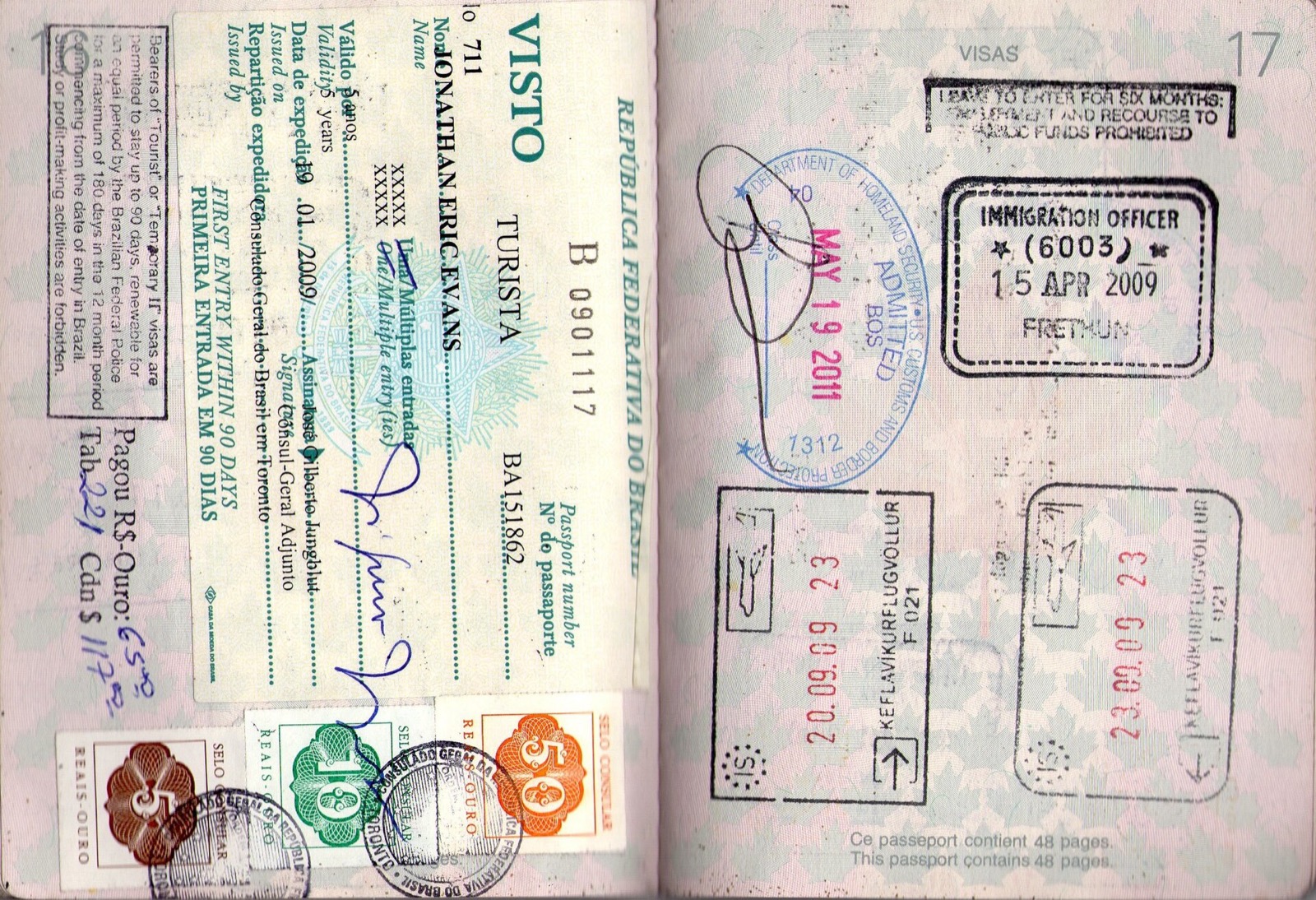
Eligibility for Summer Work and Travel comes from three places: your student status, the job you will do, and the rules on entering the US. Each has its own test, and a gap in any one can stop a season before it starts. The apply hub links the later steps, and this page covers who qualifies.
The short version
- Check that you are a full-time student at a school outside the US with one semester done.
- Find out if your country is a visa waiver country; if not, get a job before you enter.
- Pass your sponsor’s English check and interview, in person or by video.
- Make sure your insurance covers at least $100,000 of medical costs per accident or illness.
- Plan for four months at most, and go home before your school starts again.
Who can join: student status and semesters
You must be a college or university student enrolled full-time at an accredited post-secondary school outside the United States. The school must be classroom-based and physically located outside the US. Final-year students count, as long as they are enrolled full-time when they apply.
You also need at least one completed semester, or the equivalent, of post-secondary study. A sponsor must confirm all of this at the time you apply, under 22 CFR 62.32.
The program is tied to the long break between academic years, and the State Department decides the exact window. Season dates are on the program dates page.
English and the sponsor interview
Your sponsor, not you, carries the duty to check your English. It must verify conversational English and reading comprehension. It can do this through recognized language tests given by schools, or through the documented interviews the rules require.
Those interviews are mandatory. Sponsors must interview you in person or by video conference and document the interview. The how to apply page shows where the interview sits in the sequence.
Do you need a job before you arrive?
It depends on your country. Participants who are not from a visa waiver country must be pre-placed in a job before entry. For them, the sponsor must provide pre-arranged and fully vetted employment.
Visa waiver country participants may enter without a job. Their sponsor must ensure they have enough money to support themselves while they search, and must make reasonable efforts to find work for anyone still without a job after one week. Once you arrive and find a job, the sponsor must vet it within 72 hours.
How long you can stay
The State Department program page puts the maximum at four months, and the regulation matches. Extensions of program participation are not permitted. You must also return to your home country before your university or college starts again. Treat the four months as a hard ceiling and plan travel inside it.
The requirements, one by one
The State Department lists what a Summer Work Travel student must be:
- Proficient in English. Sufficiently proficient to successfully interact in an English speaking environment.
- A post-secondary student. Enrolled in and actively pursuing a degree or other full-time course of study at an accredited, classroom-based institution outside the United States.
- Past the first semester. Successfully completed at least one semester or equivalent of post-secondary academic study.
- Pre-placed in a job. Pre-placed prior to entry, unless from a visa waiver country.
Sponsors also select applicants who show an intention to take part in the cultural aspects of the program. The program’s purpose is to give foreign college and university students opportunities to interact with US citizens, experience US culture, travel, and work in jobs that need minimal training. Participants can be admitted to the program more than once.
An accompanying spouse is not an option in this category: the regulations prohibit an accompanying spouse in Summer Work Travel.
Visa waiver countries and the Visa Waiver Program
The job-before-entry rule turns on whether your country is a visa waiver country. The regulation names nationals of Visa Waiver Program countries as the group that may arrive without a job. The State Department’s Visa Waiver Program page, in its 2025 capture, names these countries: Andorra, Australia, Austria, Belgium, Brunei, Chile, Croatia, Czech Republic, Denmark, Estonia, Finland, France, Germany, Greece, Hungary, Iceland, Ireland, Israel, Italy, Japan, Latvia, Liechtenstein, Lithuania, Luxembourg, Malta, Monaco, Netherlands, New Zealand, Norway, Poland, Portugal, Qatar, San Marino, Singapore, Slovakia, Slovenia, South Korea, Spain, Sweden, Switzerland, Taiwan and the United Kingdom. Ask your sponsor whether your country counts for your season.
Being a visa waiver country does not let you skip the J-1 visa. Foreign nationals may not travel to the US to take part in an exchange on a visitor visa or through the Visa Waiver Program. Every participant needs an exchange visitor visa.
From acceptance to the airport
The Department of State’s steps run in order:
- Apply through a pre-approved organization in the United States.
- Be accepted into a qualifying program, which registers you in SEVIS.
- Pay the SEVIS I-901 fee once you are notified your registration is active, unless your sponsor says it is not required.
- Complete the online DS-160 visa application and print the confirmation page to bring to your interview.
- Attend the visa interview. Interviews are generally required, with limited exceptions. A consular officer decides whether you qualify for an exchange visitor visa.
Bring a passport valid for at least six months after your period of stay, unless a country-specific agreement allows otherwise, together with the Form DS-2019 that your sponsor sends after entering your data in SEVIS. Embassies may also ask for documents on the purpose of your travel, your intent to depart the United States after your travel and your ability to pay.
A visa does not guarantee entry. Officers of US Customs and Border Protection decide at the port of entry. You may not enter the US more than 30 days before the program start date. For the visa itself, apply at the nearest US embassy or consulate in your country of residence once your sponsor has given you a Form DS-2019.
After the season
All exchange visitors are expected to return to their home country on finishing the program. Failure to depart the US on time puts you out of status, and under US law a visa held by a person out of status is automatically voided. Students must also return home before their university or college starts.
Which jobs are allowed, and which are not
Sponsors may place you only in seasonal or temporary jobs. A job is seasonal when the work is tied to a time of year by an event or pattern. It is temporary when the employer has a one-time, peak-load or intermittent need.
The rules also list jobs that are off-limits:
| Excluded job type | Rule | Source |
|---|---|---|
| Jobs with another J visa category | Camp counselor, trainee or intern roles belong to their own categories | 22 CFR 62.32 |
| Night work | Hours falling mostly between 10:00 p.m. and 6:00 a.m. | 22 CFR 62.32 |
| Mostly commission pay | Jobs that do not guarantee minimum wage | 22 CFR 62.32 |
| Domestic help in private homes | Child care, elder care, gardener, chauffeur | 22 CFR 62.32 |
| Pest control and distribution | Chemical pest control, warehousing, catalogue and online order centers | 22 CFR 62.32 |
| Driving jobs | Operating vehicles or vessels that require a driver’s license | 22 CFR 62.32 |
| Clinical care | Positions with patient contact | 22 CFR 62.32 |
| Hazardous to youth | Jobs declared hazardous under 29 CFR part 570, Subpart E | 22 CFR 62.32 |
Host employers face limits too. They cannot have had layoffs in the past 120 days or have workers on lockout or on strike. They also cannot displace US workers at the site where you work.
Insurance you must carry
Insurance is part of staying eligible under 22 CFR 62.14. Your sponsor must require sickness and accident coverage in effect for your whole program. The required period is your actual participation as recorded in SEVIS.
| Coverage | Minimum | Source |
|---|---|---|
| Medical benefits | $100,000 per accident or illness | |
| Repatriation of remains | $25,000 | |
| Medical evacuation to home country | $50,000 | |
| Deductible | No more than $500 per accident or illness |
Co-insurance may require you to pay up to 25% of covered benefits. Sponsors cannot charge you for providing insurance beyond demonstrable staff time. Sponsors must also tell you that you and any accompanying spouse or dependents may be subject to the Affordable Care Act. If you willfully fail to keep the coverage or misstate it to your sponsor, you are in violation and can be terminated as an exchange visitor. A sponsor must end your participation if it determines the failure was willful.
New rules for 2026
Two federal actions can change whether and how you enter.
Entry suspensions
A presidential proclamation took effect at 12:01 a.m. eastern time on January 1, 2026. It suspends entry on J visas, among other categories, for nationals of listed countries; Benin is one. The proclamation calls for reports on whether its suspensions should be continued, terminated, modified or supplemented, so read the proclamation text for your country before paying any fee.
No visa issued before the proclamation’s effective date is revoked by it. A student from a listed country still holding an older visa is not cancelled by this rule.
Fixed time period of admission
A DHS final rule changes admission in the F, J and I classifications from duration of status to a fixed time period. It amends a proposed rule published on August 28, 2025. The rule, published on July 17, 2026, listed an effective date of September 15, 2026. As of 2026-10-20 (USCIS I-539 page), a federal court order of Sept. 14, 2026 postponed that effective date, DHS is preliminarily enjoined from implementing the rule, and USCIS proceeds under the previous regulatory provisions until the order is lifted. Look at the USCIS I-539 page for the current status before you plan around either set of rules. The four-month program cap still applies to Summer Work and Travel.
Questions applicants ask
What are the requirements to qualify for the J-1 Work and Travel program?
You must be enrolled full-time at an accredited post-secondary school outside the US and have completed at least one semester. A sponsor must check your conversational English and reading comprehension, and must interview you in person or by video. Non-visa-waiver participants need a job arranged before entry.
What are the new J-1 visa rules for 2026?
Two changes stand out. A presidential proclamation effective January 1, 2026 suspends entry on J visas for nationals of listed countries. A DHS final rule published July 17, 2026 replaces admission for the length of your status with a fixed time period for F, J and I classifications. It listed September 15, 2026 as its effective date, but as of 2026-10-20 (USCIS I-539 page) a federal court postponed that date on Sept. 14, 2026.
What are the travel restrictions for a J-1 visa?
Nationals of countries named in the December 2025 proclamation cannot enter on a J visa while it applies; Benin is one named country. Visas issued before January 1, 2026 are not revoked by it. You must also return home before your school term starts.
Can I extend my Summer Work and Travel program?
No. The program is limited to four months, and the rules state that extensions of program participation are not permitted. The State Department page also lists four months as the maximum length.
Do I need health insurance for Summer Work and Travel?
Yes. Your sponsor must require sickness and accident insurance for your whole program as recorded in SEVIS. Medical benefits must be at least $100,000 per accident or illness, and the deductible may not exceed $500.
Do I need a job before I arrive?
Only if you are not from a visa waiver country. Those participants must be pre-placed in a job before entry. Visa waiver participants may arrive without one, but need enough money to live on while they search.
Read next
Apply
How to Apply for J-1 Summer Work and Travel: Steps from Sponsor to Visa
Apply for J-1 Summer Work and Travel step by step: choose a sponsor, interview, get a job, receive the DS-2019, pay the SEVIS fee and attend the visa interview.
Apply
J-1 Summer Work and Travel Sponsors: List, How to Check One, What It Must Do
The State Department's list of designated Summer Work Travel sponsors, how to check one before you pay, what it must do for you, and where to report problems.
Apply
J-1 Summer Work and Travel Program Dates by Country
J-1 Summer Work and Travel season windows: the four-month cap, the full 2026 country chart from one sponsor group, and the 30-day grace period.
Sources
- Summer Work Travel (J-1 BridgeUSA, U.S. Department of State) · U.S. Department of State, Bureau of Educational and Cultural Affairs · j1visa.state.gov · checked October 20, 2026
- 22 CFR 62.32 Summer work travel (eCFR) · eCFR (U.S. Government Publishing Office) · ecfr.gov · checked October 20, 2026
- 22 CFR 62.14 Insurance (eCFR) · eCFR (U.S. Government Publishing Office) · ecfr.gov · checked October 20, 2026
- Presidential Proclamation: Restricting and Limiting the Entry of Foreign Nationals to Protect the Security of the United States (December 16, 2025) · The White House · whitehouse.gov · checked October 20, 2026
- Federal Register final rule 2026-14439: fixed time period of admission for F, J and I classifications (DHS) · U.S. Federal Register · federalregister.gov · checked October 20, 2026
- Exchange Visitor Visa (travel.state.gov, Wayback capture of 2025) · U.S. Department of State, Bureau of Consular Affairs · travel.state.gov · checked October 20, 2026
- Visa Waiver Program (travel.state.gov, Wayback capture of 2025) · U.S. Department of State, Bureau of Consular Affairs · travel.state.gov · checked October 20, 2026
- Common Questions for Participants (J-1 BridgeUSA, U.S. Department of State) · U.S. Department of State, Bureau of Educational and Cultural Affairs · j1visa.state.gov · checked October 20, 2026
- I-539, Application to Extend/Change Nonimmigrant Status (USCIS; alert on the final rule, seen 2026-10-20) · U.S. Citizenship and Immigration Services · uscis.gov · checked October 20, 2026
Image credits (1)
- Jon Evans / Wikimedia Commons · CC BY 2.0 · source

Fees, forms and wage rates change: each source shows the date it was checked. How we check facts · Report an error.